Non-Destructive Digging & Hydro Vacuum Excavation
Safe, controlled excavation to physically verify underground utilities before you build.
When Accuracy Matters
When accuracy matters, physical verification is the only way to remove uncertainty. Our non-destructive digging (NDD) services allow to safely expose underground utilities without damaging surrounding assets.
We precisely target specific area with a high level of accuracy, leading to ease of restoration.
Ideal for potholing, service proving, borehole clearance and high-risk design validation.
What Is Non-Destructive Digging?
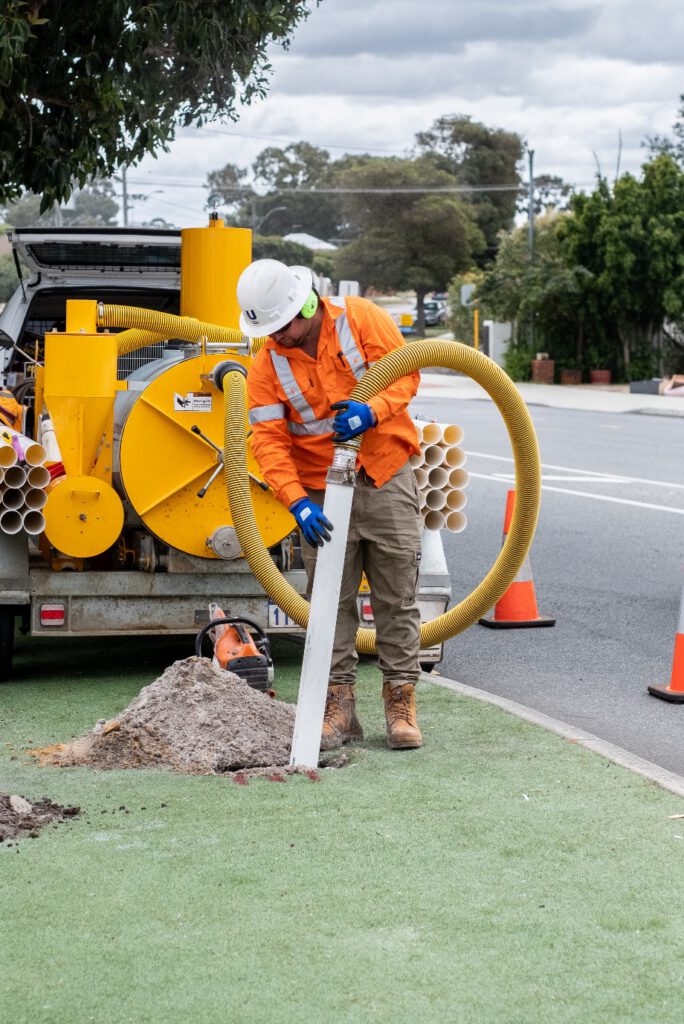
Non-destructive digging uses controlled water pressure and vacuum extraction to carefully remove soil and expose buried services without damaging them. It is commonly referred to as hydro vacuum excavation, vac truck excavation or potholing.
Unlike mechanical excavation, this method reduces the risk of asset strikes, protects surrounding infrastructure and maintains ground stability. It is the safest and most controlled way to confirm what is actually in the ground.
In projects where records are incomplete or conflicting, this step is critical.
When Is Vacuum Excavation Required?
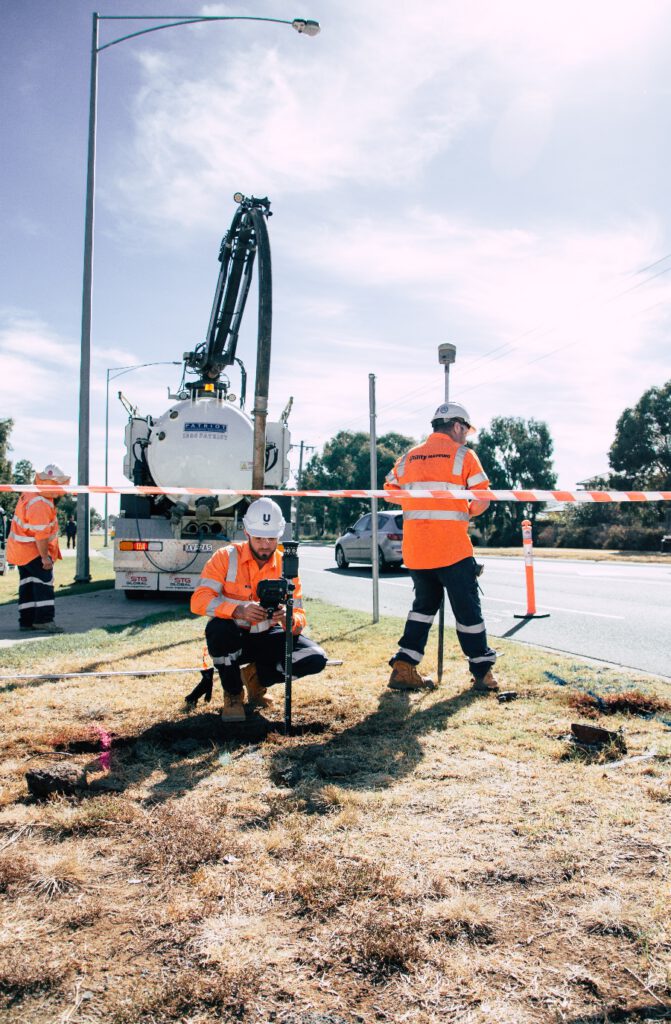
Hydro vacuum excavation is typically required when utilities must be physically verified to Quality Level A under AS5488, when boreholes need clearance prior to drilling, or when designers require confirmed depths and diameters before finalising documentation.
It is also common in transport infrastructure, rail corridors, urban road networks and defence environments, where even minor damage can cause major delays or operational risk.
In short, if the consequence of getting it wrong is high, potholing is the right step.
Equipment That Adapts to Ground Conditions
Ground conditions vary significantly across Australia, and the excavation method must adapt accordingly.
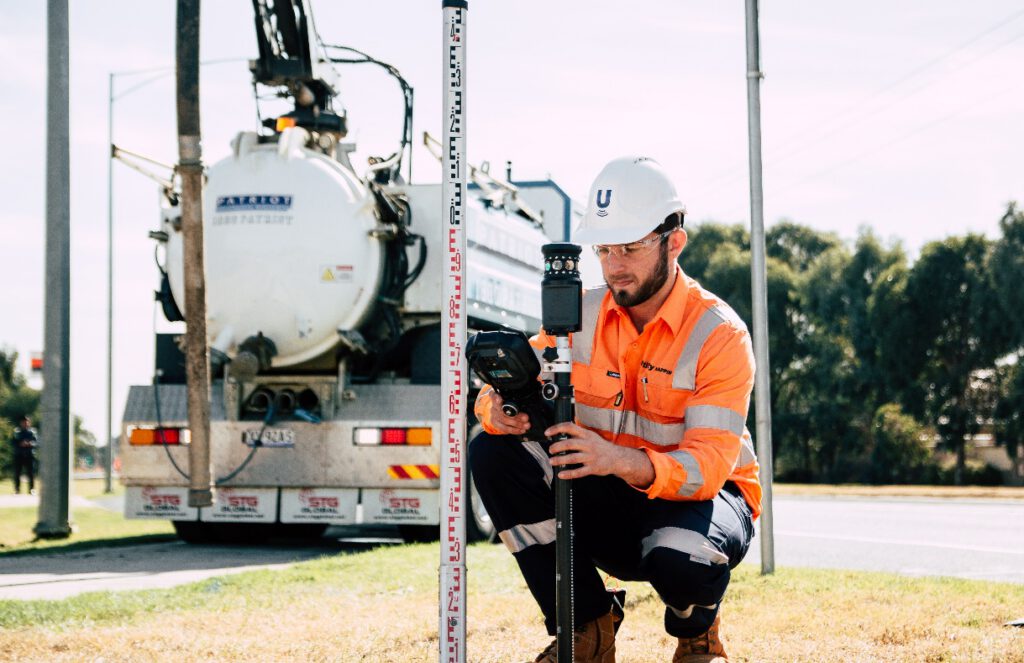
On the East Coast, where soil conditions are typically heavier and clay-based, we work with specialist hydro vacuum excavation providers using large vac trucks that combine high-pressure water and slurry extraction.
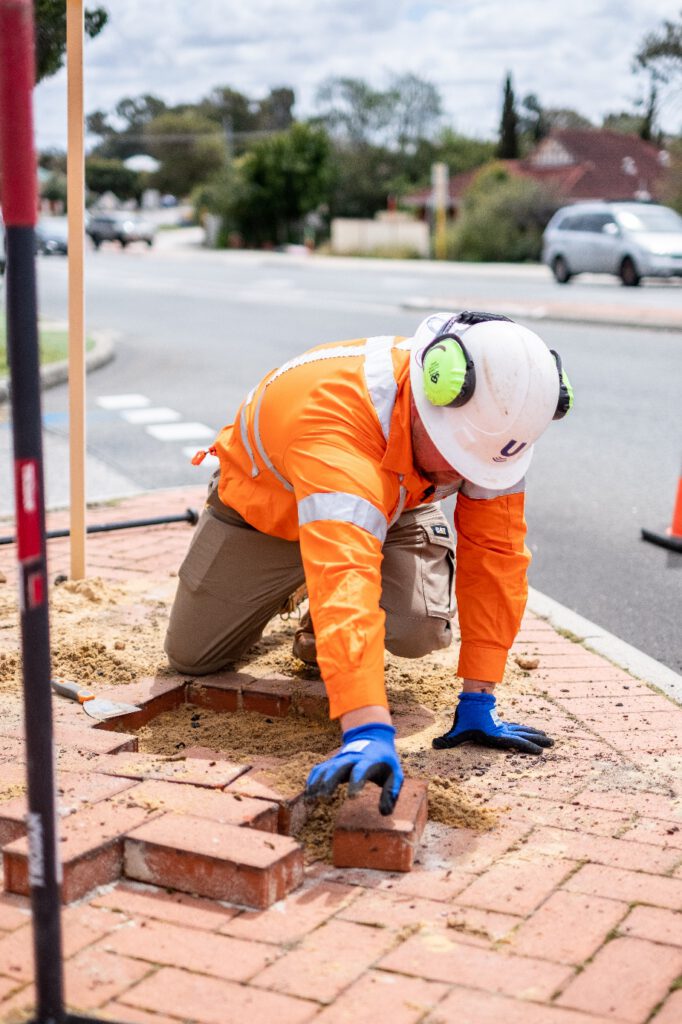
In Western Australia, where sandy conditions are common, we operate dedicated vacuum trailer units designed to remove and reinstate sand efficiently without generating excess slurry. This approach minimises waste, improves speed and reduces reinstatement impact.
FAQ
Under the Australian Standard AS5488, Quality Level A represents the highest level of confidence. It requires direct exposure of the utility so its true position and attributes can be measured.
It confirms:
- Horizontal and vertical location
- External diameter
- Material type
- Asset condition
- Configuration and connections
That information is then surveyed and incorporated into models and drawings so the design team clearly understands both the asset and its level of certainty.
No. Non-destructive digging forms part of a broader subsurface investigation process.
In most projects, the workflow begins with a review of utility records and on-site detection using electromagnetic locating and ground penetrating radar. From there, targeted potholes are identified and safely excavated. Once exposed, utilities are surveyed, modelled and documented before reinstatement.
Because our team integrates detection, excavation and survey under one coordinated workflow, the final output is verified, modelled and attributed utility data that can be relied upon for design and construction.